
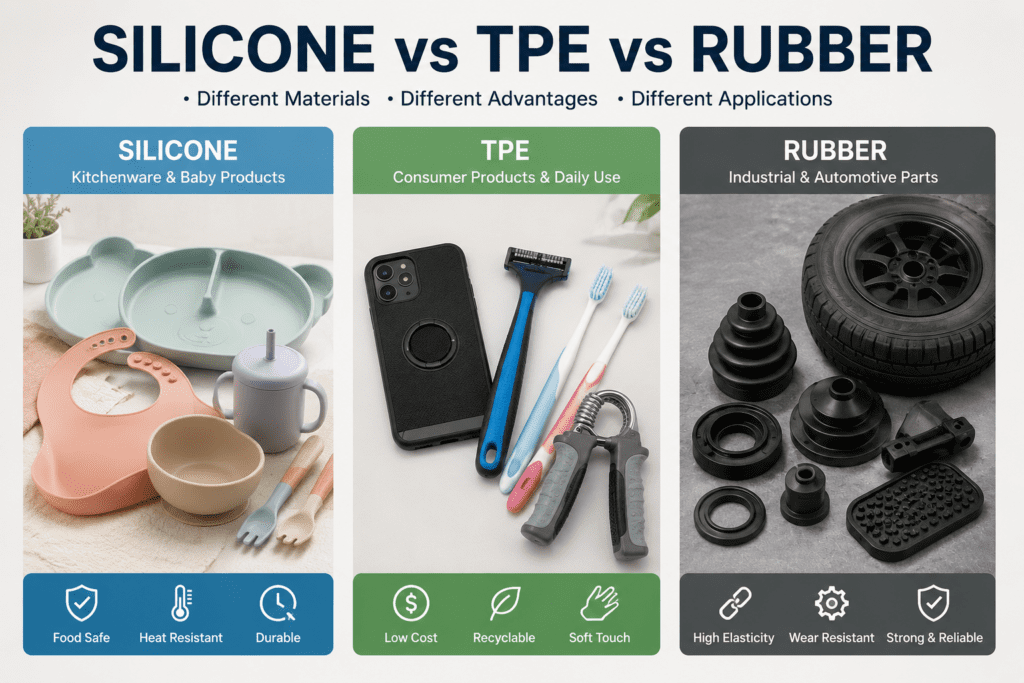
When developing a new product, choosing the right material is one of the most important decisions. Silicone, TPE (Thermoplastic Elastomer), and Rubber are three commonly used materials across industries such as baby products, kitchenware, beauty tools, automotive parts, and consumer goods.
Each material has unique advantages and limitations. Understanding the differences can help manufacturers and product developers make better decisions for performance, safety, and cost.
What Is Silicone?
Silicone is a synthetic elastomer made from silicon, oxygen, carbon, and hydrogen. It is widely known for its flexibility, durability, and excellent temperature resistance.
Advantages of Silicone
- Food-grade and medical-grade options available
- Excellent heat resistance
- Flexible and durable
- Odorless and non-toxic
- Resistant to UV, ozone, and aging
- Suitable for long-term use
Common Silicone Applications
- Baby feeding products
- Kitchen utensils
- Bakeware
- Beauty and skincare tools
- Medical devices
- Automotive seals and gaskets
What Is TPE?
TPE stands for Thermoplastic Elastomer. It combines the characteristics of rubber and plastic, making it a popular material for cost-sensitive products.
Advantages of TPE
- Lower production cost
- Lightweight
- Soft touch surface
- Recyclable
- Easy injection molding process
Common TPE Applications
- Toothbrush handles
- Phone accessories
- Fitness equipment grips
- Toys
- Consumer electronics
What Is Rubber?
Rubber can be natural or synthetic and has been widely used in industrial manufacturing for decades.
Advantages of Rubber
- High elasticity
- Good abrasion resistance
- Cost-effective for industrial applications
- Strong mechanical performance
Common Rubber Applications
- Tires
- Industrial seals
- Vibration dampers
- Conveyor belts
- Automotive components
Silicone vs TPE vs Rubber Comparison
| Feature | Silicone | TPE | Rubber |
|---|---|---|---|
| Food Contact Safety | Excellent | Moderate | Limited |
| Heat Resistance | Excellent | Fair | Good |
| Flexibility | Excellent | Good | Excellent |
| Durability | Excellent | Moderate | Good |
| UV Resistance | Excellent | Moderate | Moderate |
| Recyclability | Limited | Excellent | Limited |
| Production Cost | Higher | Lower | Moderate |
Which Material Is Best for Baby Products?
For baby products, silicone is typically the preferred choice because it is:
- BPA-free
- Non-toxic
- Heat resistant
- Easy to clean
- Durable for long-term use
Many leading baby brands choose food-grade silicone for pacifiers, teething toys, bibs, bowls, and feeding accessories.
Which Material Is Best for Kitchenware?
Silicone is generally the best material for kitchen products due to its superior heat resistance and food safety compliance.
Common products include:
- Baking molds
- Spatulas
- Cooking utensils
- Ice trays
- Food storage accessories
Which Material Is Best for Automotive Applications?
The answer depends on the operating environment.
Silicone is preferred for high-temperature applications such as engine components and sealing systems.
Rubber remains a cost-effective solution for many standard automotive parts where extreme heat resistance is not required.
Final Thoughts
There is no single material that is ideal for every product.
Silicone offers the best combination of safety, durability, and performance for baby products, kitchenware, and premium consumer goods.
TPE provides a cost-effective solution for mass-market consumer products.
Rubber remains an excellent choice for industrial and automotive applications.
When selecting a material, manufacturers should consider product requirements, safety regulations, production volume, and long-term performance.
At Dongguan Kaiwei Silicone Technology Co., Ltd., we help global brands develop custom silicone products from concept and prototyping to mass production and worldwide delivery.