
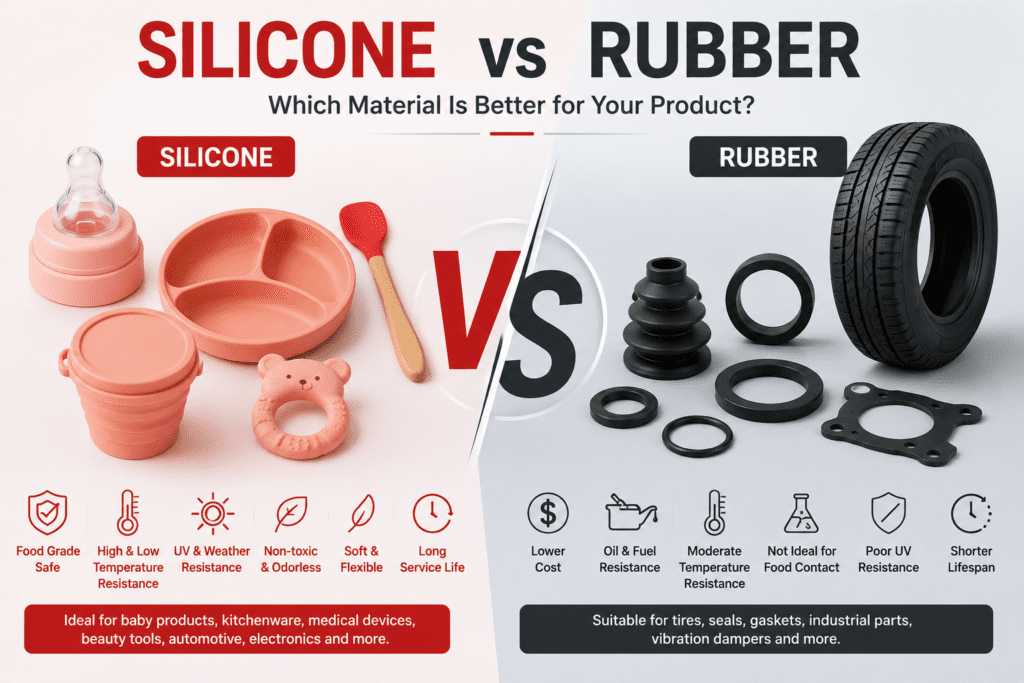
When developing a new product, selecting the right material is one of the most important decisions. Two commonly used elastomer materials are silicone and rubber. While they may appear similar, they offer different performance characteristics that can significantly impact product quality, durability, and user experience.
In this guide, we compare silicone and rubber to help you determine which material is best for your application.
What Is Silicone?
Silicone is a synthetic elastomer made primarily from silicon, oxygen, carbon, and hydrogen. It is known for its excellent flexibility, durability, and resistance to extreme temperatures.
Silicone is widely used in:
- Baby products
- Kitchenware
- Medical devices
- Beauty tools
- Automotive components
- Consumer electronics
What Is Rubber?
Rubber refers to both natural rubber and various synthetic rubber materials such as EPDM, NBR, and SBR.
Rubber is commonly used in:
- Tires
- Industrial seals
- Gaskets
- Vibration dampers
- Mechanical components
Silicone vs Rubber: Key Differences
1. Temperature Resistance
Silicone performs exceptionally well in both high and low temperatures.
| Property | Silicone | Rubber |
|---|---|---|
| Low Temperature | -60°C | -30°C |
| High Temperature | 230°C+ | 100-120°C |
For products exposed to extreme environments, silicone is often the better choice.
2. Food Safety and Medical Applications
Silicone is non-toxic and can meet FDA and LFGB standards.
This makes silicone ideal for:
- Baby feeding products
- Kitchen utensils
- Medical accessories
- Personal care products
Most standard rubber materials are not suitable for direct food contact.
3. Durability and Aging Resistance
Silicone offers superior resistance to:
- UV exposure
- Ozone
- Weathering
- Moisture
Outdoor products typically last longer when manufactured with silicone.
4. Flexibility and Comfort
Silicone maintains flexibility over a wide temperature range and provides a soft-touch feel.
Applications include:
- Wearable products
- Baby products
- Beauty accessories
- Consumer electronics
5. Chemical Resistance
Different rubber compounds may outperform silicone in certain oil and fuel environments.
For example:
- NBR rubber performs well with petroleum oils.
- Silicone performs better in food-grade and high-temperature applications.
Material selection should always be based on actual usage conditions.
6. Cost Comparison
Rubber is generally less expensive than silicone.
However, silicone often delivers better long-term value because of:
- Longer lifespan
- Lower maintenance requirements
- Higher product quality perception
For premium products, silicone is often the preferred option.
When Should You Choose Silicone?
Silicone is recommended when your product requires:
✓ Food-grade compliance
✓ High temperature resistance
✓ UV and weather resistance
✓ Soft-touch surface
✓ Long service life
Typical products include:
- Silicone baby products
- Kitchenware
- Beauty tools
- Pet accessories
- Automotive interior components
When Should You Choose Rubber?
Rubber may be a suitable option when:
✓ Cost is the primary concern
✓ Fuel or oil resistance is required
✓ Industrial mechanical applications are involved
✓ Food-contact certification is unnecessary
Conclusion
Both silicone and rubber have unique advantages. The right choice depends on your product’s performance requirements, operating environment, safety standards, and budget.
For brands seeking durable, safe, and premium-quality products, silicone is often the preferred material.
At Kaiwei Silicone, we help customers select the most suitable silicone materials and provide complete OEM & ODM manufacturing services from concept to mass production.